Showing posts with label Physics. Show all posts
Friday, October 3, 2014

Nobel Bets 2014

I am breaking my blogging silence to go on record with my predictions for the 2014 Nobel Prize.  The physics prize will be awarded next Tuesday, so place your bets now!.   (Last year was too easy, everyone knew it was going to be Higgs). 

A lot of people think I am placing my money years too early, but I really think the time is now ripe for Topological Insulators to receive a Nobel Prize.   My reasons:

(A)   The topic has been hugely influential, and has very much changed how we think about matter
(B)   The Nobel Committee tends to rotate between fields, and condensed matter last got the prize in 2010 (graphene), so I think the stars are properly aligned.
(C)   There was a “Nobel Symposium” on Topological Insulators this summer, and that is a good sign.

So who will be included on the prize?   This is where things get complicated. Charlie Kane is probably a lock, but beyond this, things are up in the air.

Case 1) Prize emphasizes theory of topology in condensed matter

                                Charlie Kane, for topological insulators
                                Duncan Haldane, for spin chains
                                David Thouless, for topological quantum numbers

Pro:   Thouless is someone who really should have gotten a prize for something by this time!
Con:  Volovik should be included  (I suppose one could swap out Haldane, but the spin chain work was pretty important too!)

Case 2) Prize emphasizes quantum spin Hall physics

                                Shou-Cheng Zhang, for prediction of quantum spin Hall effect
                                Laurens Molenkamp, for experimental observation of quantum spin Hall effect
                                Charlie Kane, for topological Insulators

Pro:  Contains experiment
Con: So what?  This field has been driven much more by theory
Pro:   There is political force in the community behind this one
Con: There is political force in the community behind this one

 Case 3) Prize recognizes discovery of the Z2 invariant in 2D

                                Charlie Kane and Gene Mele for one killer paper.

Pro:  Very simple and focused
Con: Leaves everyone else out.

The 3D topological insulators, would be hard to recognize with a prize simply because too many people were involved both in the theoretical and experimental aspects of the discovery.   

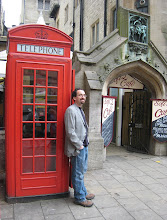
If Topological Insulators is indeed awarded the prize, I will put in a blog post explaining what they are.   I might also add a story about sitting in a bomb shelter with Charlie Kane while being shelled by Hamas in Israel this summer.  And I might explain what this picture is about...

Sunday, September 30, 2012

Nobel Bets 2012

It is that time of year again when the brightest of the brightest lie awake at night wondering whether they will get that elusive call from Stockholm.  For the rest of us, it is that time of year when we place our bets and take our chances.

Official betting odds have the Higgs boson as the heavy favorite.  See the official odds here.  The odds stand at roughly 1 in 3 that the prize will be somehow related to the Higgs.  Although at least seven people have some possibility of being included in this prize, the favorite combination appears to be Higgs and Englert. 

That said, betting odds are not everything.   The betting odds for Bob Dylan winning the literature prize are now almost 1 in 10.   However, these odds have apparently been artificially pushed up by many people who like the idea of putting their money on the rebellious bard.   (Still, Murukami remains the odds-on favorite for literature).

So do I think Higgs will win the prize?  Yawn.  Yes, I think that is probably the best bet for this year.     (The atlantic monthly says it is a sure thing). 

Reuters, however,  is betting against the Higgs.  They have listed three alternatives here.

1. Photoluminescence in Porous Silicon, Leigh T.  Canham.   Yawn.   Yes, this started a big field, and has been cited many times.  I just don’t think it is interesting enough.  

2. Slow Light, Steven Harris and Lena Hau.  Yeah, this was pretty cool.  And it would be very nice to have another woman physics Nobel Laureate.   But again, I somehow don’t think this is a likely one.

3. Quantum Teleportation, Charles H. Bennett, Gilles Brassard, and William K. Wootters.  This one is interesting, and potentially possible.  But I think it is slightly the wrong combination.  The teleportation paper was 1993 --- and it had seven authors.  I would instead choose Quantum Cryptography (which came first by many years) and award the prize to Bennet and Brassard (for their 1984 paper) along with Stephen Wiesner, for work in the early 1970s which had some of the key ideas in it.  In some ways the ideas that these guys were working on in the 70's and 80's really launched the quantum information field.   (Also Wiesner is an interesting character --- a bit of a hermit genius.)   

I still have my money on Higgs, but the quantum option an interesting one.

And who else should be on the list?   

For a number of years I've been saying Michael Berry for the famous "Berry Phase".  Yes, I know there were several previous discoveries of Berry Phase before Berry, but no one really nailed the issue  the same way that Berry did.    A possible combination (and one I'd really like to see) with Berry would be David Thouless.   I used to think Yakir Aharonov would be a good combination with Berry until I found out about this paper by Ehrenberg and Siday which was ten years before Aharonov-Bohm and has basically the same result.

Another one that no one besides me seems to think is likely is the discovery of neutrino mass by the Super-K collaboration.  I guess the problem there is that it is not clear which person (or people) would get the prize.  It is certainly deserving though.

Anyone else have opinions?


Saturday, August 25, 2012

Trieste Physics on the Beach


The International Centre for Theoretical Physics was the brainchild of Nobel Laureate Abdus Salam who felt that a place was needed for international physics meetings.  In particular he wanted a place to allow scientists in otherwise isolated nations to interact with the best of the best.   Salam was a terrific politician and he managed to get funding from Italy, from the UN, and from the International Atomic Energy Agency to build this institute in Trieste Italy.    Perhaps his greatest genius though was putting the Centre right on the beach of the Adriatic.  This picture is the view from one of the guest-house balconies.  Yes, admittedly only half of the rooms face the ocean.  But still,  whichever way your room faces, you only have to walk about 50 meters down the road to get to a beach.  Awesome!

Last week's conference at Trieste (which can only be called "Majorana Fest 2012") was an excellent (if perhaps a bit over-focused) short workshop bringing together some great researchers from all over.   If you are curious you can listen to all the talks online here.  My talk starts about two thirds through this file  and then is finished in this file.

During this conference I tried out a new way of doing physics --- that would be physics while floating.   One day, puzzled by some physics emails from collaborators, I decided to go for a swim. I floated on my back silently for half an hour and pondered these emails -- deciding on a route forward only after having become completely pruney.    Feeling that this was productive, the following day I scheduled a physics meeting out in the water.  Jason Alicea and I had a rather long discussion about topological physics in two and three dimensions  -- -parafermions and fibonacci anyons and all sorts of other interesting things  -- all while paddling around in the Adriatic.   Somehow I really like this way of doing physics.   Perhaps just because it is so different from the usual day at the office, it seems surprisingly productive.  Maybe Abdus Salam had this in mind.


Sunday, August 19, 2012

Physicists Hard At Work

Sometimes my non-physics friends are curious about what working as a physicist is like.   At conferences it is often a lot of talking and scribbling (either on paper or on chalkboards or whiteboards).    Here are some pictures from the Stockholm conference.  (All photo credits go to Joost Slingerland.  I have a camera on my mobile phone too, but it only takes blurry pictures that could be the Loch Ness Monster).

Here is a picture of Fiona Burnell explaining to me some subtleties of topological gauge theories in 3+1 dimensions.


You probably can't read the whiteboard.   I don't have a photo of the board after that particular discussion.  To get a better idea of what our whiteboards look like, here is a photo from the room down the hall which many of us used as an office.

     Yes, I admit I am the immature one who drew the elephant from the rear.  And I'm also the immature one who drew the guy peaking out from the left.       The rest of the chalkboard is an amalgam of several different conversations that occurred over the course of the week. 
Conferences like this are certainly not all-work-and-no-play.  Besides jumping out of airplanes, we also tend to go out for a fair number of good meals -- and not always just soup.   One place that is exceptionally good in Stockholm is Herman's Vegetarian Cafe.  If you are a vegetarian, or even if you are just a vegetarian sympathizer, the buffet at this place is wonderful.   

This picture was taken after a huge dinner at Herman's.   From the right it is Jerome Dubail, his wife (I'm sorry I don't remember her first name right now.  My memory for names is really terrible these days!), Gunnar Moller, and yours truly.    Here we are sitting at picnic tables having just eaten everything in sight.  Behind me is a brick wall, and behind the brick wall is a roughly 20 meter drop to a road, but then on the other side of the road is the sea.  As you probably know, Stockholm is an archipelago, so from here you look over the water to see other parts of the city as the sun sets. 
                                              
In this picture Shanna Haaker has just suggested that we could measure the drop from the brick wall to the road by jumping over the wall and timing the drop.  I'm not sure if she meant that she should jump over the wall or if she meant that I should jump over the wall.


Tuesday, October 5, 2010

Graphene

The Nobel Prize in Physics today was awarded for the discovery of Graphene, a single layer carbon sheet. Back in this post in 2009, I mentioned that this was a hot topic at the APS march meeting.

It turns out that the whole trick to producing graphene is Scotch-Tape. If you take a piece of tape and you lightly touch it to graphite (pencil lead) you frequently will pull off just a single layer of carbon. Pretty cool. (This trick for pulling off thin layers with tape has been known for many years to chemists and material scientists).

Back in this post when I was taking bets for last year's Nobel prize, I made the following statement suggesting that it was not actually deserving of the prize:

Reuters proposes Geim and Novoselov (22%) for the discovery of graphene (carbon sheets) and Ijima (14%) narrowly behind for the discovery of nanotubes (carbon sheets rolled up into a tube). Not that I am opposed to carbon but…

I will remind everyone that Buckyballs, yet another form of Carbon, already won the Nobel prize recently – but in chemistry, not physics. I will also remind everyone that not every molecule made of carbon deserves an immediate Nobel prize. I know that the Carbonists have been lobbying hard, and admittedly both nanotubes and graphene are pretty cool. But I don’t think they are so overwhelmingly cool that they need a Nobel prize just yet. And if the lessons of Buckyballs are anything to learn from, we should expect that the hype will far outweigh the actual usefulness of, or interest in, the stuff in the long run.

I'm amused to see that Doug, over at nanoscale views seems to have a similar opinion.

On the flip-side, graphene is pretty cool stuff. If any fraction of the hype turns out to be true in 10 years, then I would certainly support the prize (and simultaneously eat my words). But from the buckeyball experience I would have thought the Nobel committee might have waited a bit longer on this one. It isn't like the winners are old geezers about to croak who have to be given the prize now since they are not going to survive until next year.

So there you have it... the Nobel prize won with Scotch-tape.
Saturday, September 25, 2010

Nobel Bets 2010

It is that time of year again -- the time when the best and the brightest from around the world lose sleep wondering if they are going to get that early morning call from Sweden announcing that they have won the Nobel prize.

Last year I placed my wager on Yakir Aharonov and Michael Berry for geometric phases in physics. This turned out to be a bad bet. From now on I am removing Aharonov from my list of likely candidates. Why? Because I was informed that the 1961 work he is most famous for actually discovered 12 years earlier by Ehrenberg and Siday (Even Wikipedia appears aware of this). The fact that it is called the “Ahanronov-Bohm effect” appears to be a good example of Stigler’s law: The principle that nothing is ever named after its original discoverer. (Stigler’s law itself was discovered by Merton).

Since last year, the prize went to Smith and Boyle and Kao for what many people disparaged as “just engineering” (albeit some pretty amazing engineering). Given that, I think this year the prize might go to something a bit more fundamental. A decent bet would be Sir Michael Berry (without Aharonov).

However, for my money, I think the front-runner is the WMAP experiment (Wilkenson Microwave Anisotropy Probe) which measured the fluctuations of the temperature of the universe – telling us a whole lot about its history. It is a very important experiment. Reuters actually agrees that this one is a pretty good bet. Another really good bet (in my opinion) is the Neutrino Mass experiment from Super-K. I bet on them in 2008 (and lost, as usual).

Another bet on Reuters is Ebbesen for surface plasmons: collective motion of light and electrons together on the surface of metals. While this is nice work, and Ebbesen is a good scientist, I think it is far from a Nobel.

Olaf Smits, in Dublin, mentioned a really interesting possibility. While a bit out of the box for a Nobel Prize in Physics, the fact that last year was a bit out of the box indicates that the Nobel committee is willing to break some rules these days. Olaf’s bet is that the prize will be awarded for the discovery of exo-solar planets. In the star-trek futuristic “this is our moment to discover that we are not alone” kind of way, I think a case could be made that this is worthy.
Sunday, September 12, 2010

In regards to my previous post

I received this plot from my brother Rob.


I think there needs to be less green.
Saturday, August 21, 2010

The Girl Who Played with… Euclid’s perfect theorem:

Like most of the northern hemisphere, I’m in the middle of reading Stieg Larsson’s books “The Girl with the Dragon Tatoo” series. In the second volume, (“The Girl who Played with Fire”) our heroine, the punked out antisocial hacker, Lisbeth Salander, gets absorbed in recreational mathematics.

Now, in almost any popular novel, when the author starts delving into math, I am usually pretty familiar with whatever theorem, or unproven conjecture the author is mentioning -- frequently much more so than the author. I applaud the attempt to bring more science into popular fiction, but I don’t usually learn much from it.

However, on page 21 of the “The Girl who Played with Fire” the author mentions an ancient – and very beautiful! – theorem by Euclid, which rather shockingly I had never seen before. (A major gap in my education!) I scratched my head for a moment, then figured out Euclid’s proof (despite the fact that Lisbeth Salander sort of gets it wrong).

First of all: Here is the statement in the novel:

She was fascinated by Euclid’s discovery in about 300 B. C. that a perfect number is always a multiple of two numbers, in which one number is a power of 2 and the second consists of the different the difference between the next power of 2 and 1. This was a refinement of Pythagoras’ equation and she could see the endless combinations

6 = 2^1 ( 2^2 -1)

28 = 2^2 \times ( 2^3-1)

496 = 2^4 \times( 2^5-1)

8128 = 2^6 \times ( 2^7 -1)


She could go on indefinitely without finding any numbers that would break the rule.


(Yes, Larsson likes to write in Italics). OK, now the proper statement of the theorem.

Definition: A perfect number is a number where the sum of the number's factors adds up to the number itself. For example:

The factors of 6 are 1, 2 and 3. 1+2+3 = 6 so 6 is a perfect number.
The factors of 28 are 1,2,4,7,14. 1+2+4+7+14=28 so 28 is a perfect number
and so forth.

Euclid’s theorem: IF (2^k-1) is a prime number THEN 2^{k-1}\times (2^k-1) is a perfect number.

Salander does not mention the IF required of this theorem, but note that on her list of perfect numbers, she lists k=2,3,5,7 which are cases where (2^k-1) is prime. This type of prime is known as a Mersenne Prime]. How Euclid proved this theorem is beyond me. He was brilliant, but he did everything with geometry – and very little algebra (which is how I intend to prove it).

Almost 2000 years after Euclid’s proof, Euler proved that if an even number is perfect, then it is the form given by Euclid’s theorem. It is still not known if any odd perfect numbers exist --- although if they do exist they have to be ginormous since it has been proven that no odd perfect numbers exist less than 10^{300} . Assuming there are no odd perfect numbers, then there is exactly one perfect number for each Mersenne prime. It is not known how many of these there are.

OK, a quick proof of Euclid’s theorem: Consider the number 2^{k-1} (2^k-1) . If p = (2^k-1) is prime, then the only factors of (2^{k-1})p are

1,2,4, \ldots, 2^{k-1}

and

p,2p,4p, \ldots, 2^{k-2}p .

Now the sum of the series

1 + 2 + 4 +\ldots, + 2^{k-1} = 2^k -1

And similarly

p + 2p + 4 p + \ldots + 2^{k-2}p = p ( 1 + 2 + 4 + \ldots 2^{k-2}) = p(2^{k-1} -1)

So the sum of all the factors of the number gives

(2^k-1) + p(2^{k-1}-1) = (2^k-1) + (2^k-1)(2^{k-1}-1) = 2^k(2^{k-1}-1)

which is the number itself!
Sunday, June 6, 2010

Congratulations to Rahul Roy

First of all, don’t try googling his name --- there is a famous Bollywood film actor named Rahul Roy. That is not the guy I’m talking about.

Last week Rahul Roy, a postdoc at Oxford (in my group, although mainly he works independently), won the prestigious McMillan award. This is a big deal. The award is presented to one young condensed matter physicist each year. (This year it was split for the first time ever, with Liang Fu, now at Harvard, winning the other half).

The work that was cited in this award was the theoretical prediction of Topological Insulators --- something I have blogged about several times before. See, for example, here.
Thursday, April 29, 2010

For your reading pleasure

Fiona Burnell and I have been working on a rather massive paper for almost two years now. Finally, this week, we declared it finished.

If you want know what it is about, you can read my short description here – or you can read the complete paper here, or you can read the reader’s-digest-massively condensed version here. If you don’t want to actually read it, you can just marvel at the cool figures.

Now, this is not the paper that has taken me the longest to write (My record in this respect was this paper, which I started with Gunnar Moller before he started graduate school, and we finished it almost exactly five years later when he was a postdoc). What is unusual about this paper is how long it is --– 35 small print pages: almost a third longer than any other paper I have ever published (not counting review articles). It feels really good to have it done.

What now? Time to write the next paper! .. and if you are the kind of person who reads this stuff, just wait til the next one… it gets even cooler soon!
Organization is not my strong point. Anyone who has seen my office, or my apartment can vouch for this. Starting my new life as a professor last year, I was worried that lack of organization – particularly in running a research group - might be my downfall. For me, in fact, the entire concept of research is fundamentally disorganized – and I’ve always felt that this is a good thing, since random wandering encourages random discovery.

Some professors do manage to run large organized groups. I think the larger the group, the more organized it has to be. Some even have detailed hierarchical structures, including lieutenants (pronounced “leftenants” over here), sergeants, and so forth. Each person has a unique and well defined project. Higher rank members oversee lower-rank members. They have group meetings periodically where one person reports on their progress, and research gets done very methodically. The top dog doles out the projects and sets the overall directions. The foot soldiers take their orders and produce the results.

But for many theoretical physicists that I know, this is not at all how research works. A more accurate description is that a researcher has some general field of interest and they simply mess around with ideas in that field until they figure out something interesting to work on. They work on this interesting idea for a while, two steps forward, one step back, and eventually do manage to make progress. But this type of messing around is not something that is easily organized. And it is particularly hard to oversee someone else’s messings and decide whether they are messing around correctly or not. Such researchers tend to have smaller research groups and tend to interact much more closely with their students and postdocs.

Of course when it finally comes time to publish discoveries, I do think it is very important to present a very organized picture of what you have found, and I do agonize over the organizations of my publications and talks. But this is more an exercise in covering your tracks and making it look like you knew where you were going all along.

Just sayin'...
Tuesday, April 13, 2010

Lecturing

Much of the teaching at Oxford is done in “tutorials”: one, two, or three students at a time with one professor (A similar system exists at Cambridge with the one important difference being that they are called “supervisions.” Oxford students insist that the word “tutorial” is better because you can shorten it to “tute”, which they do more often than not).

The tutorial system is very manpower intensive, but reasonably effective in forcing the students to keep up. I’ve been handling a full load of tutorials since the first day I joined here last year.

In addition to tutorials, there are also regular lectures. Last term, (Hilary 2010) I gave my first lecture course. It was a softball intended to ease me into the hard work of lecturing: a graduate course with only one lecture per week for 8 weeks. (Graduate courses are considered easier to teach as there are fewer students, the students are all very motivated, you can talk about whatever you want, and if you do a bad job there is far less carnage).

For those who are interested, the topic of this course was “Topological Matter”. If you want more details you can check out the web page here. (Feel free to try some of the homework assignments for fun. Many of the problems can be done without having attended lectures, and they are meant to be fun – well, fun for physicists).

As I probably should have expected, in 8 lectures I made it through about a third of my intended course outline. For a graduate course this is not so much of a problem. The course is meant to introduce the students to certain topics that they want to know about. If they learn fewer topics, but learn them better, that is fine too. Maybe another year I’ll teach the remaining two thirds.

Next year, however, I will be lecturing Condensed Matter (aka Solid State) Physics for 180 undergraduates (give or take). In this case the syllabus is very constrained, and I am required to cover certain topics –-- as these are the topics that will be examined. An interesting feature of the Oxford system is that the lecturer is not the person to write the exam. Instead, a syllabus is agreed upon before the course starts, and the exam is written based on the syllabus. The lecturers, as well as the tutors, are responsible for imparting the information in the syllabus and hence preparing the students for the exam. If a lecturer does not cover all the material, then the students could be in some trouble, and this makes everyone very unhappy. I have until January 2011 to prepare this course, and it already feels like I’m going to be very squeezed for time!
Wednesday, March 17, 2010

Notes from the 2010 March meeting

This year the March meeting of the American physical society is in Portland Oregon – a pretty hip but relatively small city of about half a million people. This week’s influx of 6000 physicists must have made a substantial dent in the median coolness of the city --– particularly within a mile or so of the Oregon convention center, where the nerd-herd is grazing. Among the exciting events of this year’s March meeting is the yearly “physics sing-a-long” and the public lecture on “the physics of superheros” (I kid you not).

Nerd bragging rights aside, there actually has been a lot of pretty awesome top notch physics stuff going on this week. Here’s a partial list of the things I thought were pretty cool so far:

(1) The BEC in a box. JILA has managed to shrink an entire BEC lab down to a small box (well, ok, about the size of a large air conditioner). They set the thing up in the exhibition hall just to show it off.

(2) More and More about topological insulators. The field just keeps getting hotter. There were tons of talks on the topic last year, this year it seems there are even twice as many…

(3) In the topological direction, there have been a bunch of talks about quantum Hall blah blah blah. Closely related was a great talk by Rafi Budakian’s on observation of half quantum vortices in Strontium Ruthenate: Very cool experiment.

(4) Yu-Ju Lin from the experimental group from NIST (The extended family of Bill Phillips) gave a great talk on producing artificial gauge fields for neutral atom BECs

(5) I’m a bit surprised there have not been more talks on AdS/CFT (maybe it is still too early and it is more of an idea than a theory). Nonetheless, the talk given by Allan Adams was really nice – explaining very clearly how gravity can (!potentially!) help us understand phase transitions of complex materials.

(6) No high Tc. I think it is notable how few talks there are on High Tc superconductivity. Maybe the field has finally been put out of our misery.
Thursday, January 7, 2010

LHC or Bell

An interesting post discussing the importance of "the old Bell Labs" and comparing the value it gave society in comparison to the LHC. Don't get me wrong, I'm in favor of the LHC. I'm just also in favor of the old Bell Labs as well.

Hat tip to Gerit Quealy for pointing this link out to me.
What is physics? I mean, what is it all about? What is the big uber-goal that we are all working for? What are the really important directions of research these days?

If you ask a physicist any one of these questions, you will inevitably get the same kind answer. Every physicist will tell you “What I work on is really important and interesting. What I do is what physics is about.” (Here “I” means whoever you ask, not “Steve Simon”). And I think most physicists passionately believe this. If they didn’t believe it, they probably would have (or should have) switched fields long ago to work on what they think is truly important.

Just for example, if you ask “is physics an experimental science?” chances are if you ask an experimentalist they will say “Of course.” If you ask a string theorist, they might say “Er… not necessarily.”

I think this diversity of views of physics is a good thing. The only thing, we really all share, is the underlying belief (perhaps faith) that the world around us can somehow be understood. However, sometimes diversity of views causes some real problems. Obviously dividing up the limited funding pie is a seriously sore point for many people.

“Why should *THEY* get so much funding when what *I* do is so much more important and interesting.”

“Do we really need to hire another physicist who does X when Y is so exciting these days.”

Or conversely

“That stuff isn’t even physics! Why would we pay to have *that* in our department”

Here at Oxford this diversity of opinion rears its head in some interesting places. One point of conflict (that seems less prevalent in the states) is over the undergraduate syllabus. Here in the UK (indeed in much of the non-US world) the undergraduate syllabus is extremely constrained. This is quite a change from my undergraduate experience (Brown University) – which required only obtaining 28 passing grades for graduation, and had no further detailed requirements: every choice of what to study was left completely to the student. In Oxford, the students follow a very rigid path. [ There are obvious advantages to each system – to be discussed another time.]

So it seems that over here someone is always saying what a travesty it is that a student with an Oxford physics degree might graduate without any exposure to X, Y or Z. Typically the person stating this is someone who has particular interest in X, Y, or Z. Further, getting X,Y,Z into the curriculum boosts the status of those researchers who study X,Y, and Z in the department – as there will always be a need, thereafter, for people to teach the subject.

But do undergrads really need X,Y,Z? How much does it even matter what they learn? Is a college degree about learning a particular topic, or about learning how to learn – about stretching you brain on anything really hard.

I think both answers are valid, although I do have a bias. If you want to guess my bias… here is a hint: For the record, here is a list of courses that I did NOT have as an undergrad:

Statistical Mechanics
Thermodynamics
Solid State Physics
Electricity and Magnetism
(beyond the level of Purcell’s introductory book)
General Relativity
Astrophysics or Cosmology
Advanced/Relativistic Quantum Mechanics
Field Theory
Fluid Dynamics
Optics
Advanced Laboratory

[yes, I did realize upon graduation that I was woefully unprepared for grad school, so I finagled to take some extra courses for a year to make up some of the difference].
Tuesday, December 1, 2009

His Dark Environment

The winter here gets very dark. This is not surprising considering how far north we are. Despite our relatively mild winters (courtesy of the Gulf Stream) we are far north of even Quebec City.

The shortest day of the year, the winter solstice, December 21st --- is a date celebrated in one way or another by most cultures on earth. On this day, London only gets 7 hours and 50 minutes of sunlight – substantially less than New York which gets 9 hours 15 minutes. On the other hand, if you happen to live in Oslo, you only get 5 hours 53, and if you live in Svalbard you won’t see the sun at all from the end of October til mid February.

However, surprisingly, the solistice is not the day when the sun sets the earliest, or rises the latest. In New York, the earliest sunset is actually December 8th and the latest sunrise is January 4th. As you get further north, these two dates get closer together: Here in London, the earliest sunset is December 12th and the latest sunrise is December 29th.

At one point in graduate school I remember pondering the geometry of why this happens --- which has to do mainly with the angle of the earth with respect to its orbital plane (if I remember correctly). I think it was my friend Dave Morin who managed to figure it out --- not surprisingly he just finished writing a classical mechanics textbook with a ton of really hard problems in it.
Monday, November 2, 2009

2009 Concert Tour

Many rock bands go on tour and give the same show night after night. Typically they sell t-shirts listing all of the locations and dates where they performed. This is what I feel like with the colloquium talk I’ve been giving this year. I constructed the talk for KITP Santa Barbara last spring (See here. On the web here) and it went over so well that I decided to do a few repeats. Soon, word got around that it is a pretty fun talk and all of a sudden, I’m doing repeat performances all over.

Here is the list just for October and November:

Friday October 2nd NUIM Maynooth Ireland
Thursday October 8th Univeristy of Warwick, UK
Friday October 23rd, University of Exeter, UK
Friday October 30th, University of Saint Andrews, Scotland
Friday November 6th, University of Leiden, Netherlands
Wednesday November 18th, Royal Holloway University, London ,UK
Wednesday November 25th,University of Utrecht, Netherlands

By the end of the term, I suspect I will be rather sick of this talk. Maybe I’ll sell t-shirts* (or veggie burritos).

*Credit: the idea of making a concert t-shirt is from Susanne Viefers.
Sunday, November 1, 2009

Andy, Andrew, and Saint Andrews

My two friends Andy McKenzie and Andrew Green used to be the only two people I knew in the Physics department at the University of Saint Andrews. I postulated that your name had to be Andrew to work there. This postulate was eventually disproven when they hired Chris Hooley.

This week I visited Saint Andrews for only a day, and had a terrific time while there. (Sadly, Chris, who is endlessly entertaining (See here), was not around during my visit).

When I arrived in Saint Andrews, I met up with Andrew Green for a pint of Deuchers (which is a very fine Scottish beer) and a sushi dinner. Then we went to a bar where there was a jazz jam session. Andrew is a very accomplished jazz trombonist, and over the years (I hesitate to say how many years we have been friends now) we have frequently talked about our common interest in jazz. I haven’t played in a quite a few years; and I believe somewhere along the line Andrew also fell out of practice for a bit, but unlike me, he did manage to start up again (with some effort) and now plays quite well. I was really looking forward to hearing him play for the first time. He even suggested I bring my horn, but I couldn’t bear to play in public without at least a few months of woodshedding to get the chops back in order … maybe this will be a project for the future. Anyway, the Saint Andrews jam session seemed like a very nice group of musicians. People subbed in and out very generously, and nicely accepted players of all levels. Many of the players were pretty good, and some were extremely good. One or two were less than good (to put it generously), but no one seemed to mind much. Rather than making me cringe, it made me feel that I should have jumped in and played --- chops or no. The bar was crowded and most people were only half listening anyway, so the occasional painful moments passed without notice.

Andrew did a super “Stolen Moments” (To quote him, “That tune works really well on trombone”). His playing was extremely clean (Even some very good trombonists fall short on this score), and his improvisation on this tune was very smooth. I was suitably impressed. The rhythm section was led by an ancient, and rather portly, pianist who was great. The drums and bass were also quite good. The guitarist -- a retired GP who looked like he was about to keel over at any moment -- also managed to hold his own. Andrew opted out of most of the tunes of the evening to give others a chance to play.

I’m sure the jam session would have gone late into the evening, but for the fact that by decree of the neighbors music must stop in that bar at 11:30. Perhaps this was just as well, as I had had a long day already – having been awake way too early to give all my tutorials in the morning at Oxford before heading to Heathrow.

**

The next morning, after my colloquium (which went very well), I chatted physics with three very interesting sets of people for the rest of the day:

First, Andrew Green – I took the opportunity to tell him all about this topic which I am pretty excited about these days. He gave last week’s condensed matter theory forum talk at Oxford (which was excellent), so I had already heard recently about his work.

Second, Ulf Leonhardt: I had never met him before, but he seems to be doing some really interesting stuff. Among other things, he was one of the guys who developed the recently publicized idea of the invisibility cloak (yes,that is for real).

Third, Andy McKenzie and his research group. Andy is a terrific experimentalist who studies many interesting exotic materials systems – including Sr2RuO4 which is one of the materials that “topological” people like me are most interested in these days.

I wish I had had more time to chat with everyone – but soon enough it was time to rush back to the airport. Maybe I’ll go back up there for another visit soon.

PS: This is my 100th blog posting!
Thursday, October 29, 2009

The Squalid State

This posting is not about the status of my flat (no comment as to whether that would be an appropriate title).

“Squalid State” is the derogatory term used to refer to the field of “Solid State” physics by other physicists, and sometimes with good reason. The field is full of people studying what appears to be the boring minutia of particular physical materials: why this impurity increases specific heat and that impurity reduces it – and so forth. This entire field of study looked so horrid to me when I was an undergrad that I absolutely refused to even consider taking a solid state physics course.

It is rather ironic then that I became a solid state physicist – or, more properly, a “condensed matter” physicist who spends a lot of time thinking about solid state. So why am I now excited about the field whereas once-upon-a-time I thought the whole endeavor was dismal? Well, I now realize that some of the most exciting physics out there is in condensed matter systems, that the diversity of condensed matter is unrivaled in any other field, that many of the deepest ideas can be tested and explored best in condensed matter systems, not to mention the importance of potential applications in this field. Unfortunately, these exciting features are extremely well hidden in introductory solid state physics courses --- almost as if by design.

This year the physics department at Oxford has decided to revamp its third year syllabus. Everyone agreed that the previous third year undergrad program was not working and that we would all benefit from trying something new. I volunteered to develop the solid state physics course for a maiden voyage in 2010-2011, when I will teach this to 180 student, more or less. I view myself as the ideal person to teach this precisely because I thought it was so boring. My job will be to make it non-awful, to somehow bring out the exciting part of the field rather than the dismal part.

However, to some extent I am trying to do this with one hand tied behind my back. The IOP (british Institute of Physics) mandates that certain topics MUST be taught in an undergraduate syllabus. Further, my colleagues will not stand for me eliminating certain other topics. Finally, the total number of lectures cannot exceed 22. Despite these rather serious boundary conditions, I still think that I can put together a very nice course – and this is what I’ve been working on for the past few weeks, and will continue to work on for the next year.

So, to all the physicists reading this: Did anyone have a good solid state physics course? If so, why did you like it, who taught it, what was covered, what book did you use?
Thursday, October 8, 2009

Bad Bets... and the Nobel Prize

My grandfather was a bookie – a guy who professionally handles bets. Although a good bookie never needs to risk much of his own money (since his bets are well balanced with just a bit of a margin for profit) most bookies do know what a good bet is and what a bad bet is.

Apparently I have no idea what a good bet is – even when I know a topic extremely well. My predictions for the Nobel Prize in Physics this year were way off*. Even listing everyone I could think of who was in the running, I didn’t even get close. The winners were not even on my radar screen. This is particularly embarrassing since two of the three winners were old Bell Labs guys and I certainly knew very well of their work, and of its importance [ although I never met either one of them since even the younger of the two retired from Bell a decade before I ever arrived ].

The two guys at Bell, Smith and Boyle, are credited with inventing the CCD (Charge Coupled Device). That is the little semiconductor gizmo that turns an optical picture into a stream of electrons which then can be turned into a digital computer file. There’s a CCD in every digital camera. The other guy, Kao, who shared the Nobel with them, developed the fiber optic, which comprises the famous “series of tubes” which carry information through the internet. Bits of information are turned into photons that run down glass fibers called optical fibers.

The prize this year was perhaps an unusual one – it is clearly technology rather than physics, but it is important technology. There has been some grousing around the internet (for example, here) that this prize was not deserving because it is just engineering. (Here I’m repeating here a comment that I posted on Doug’s blog here) The key question is what the Nobel prize should be about --- what the Nobel prize "brand" should mean. There are certainly plenty of important technology/physics advances that could potentially be recognized --- and the original intent of Nobel’s will certainly gave this latitude. It also said that the discovery should be made within the previous year --- a requirement which has been duly ignored ever since ---- which shows mainly that the Nobel committee can do whatever they want to do to promote the "brand" as they see fit. However, by far, MOST of the prizes have been for "fundamental" physics advances, and not for technology advances, which sets a precedent for what the committee thinks it is supposed to be about and this prize does not look so consistent with that interpretation. (The integrated circuit prize was another recent prize for technology --- although I think that this prize was perhaps more agreed upon as being a universal game changer that needed to be recognized).

*I did make the right prediction for the Nobel Prize in Physiology and Medicine, but almost everyone seemed to know that one in advance.

** Added: Obama's Nobel: Yes, I was pretty surprised by this one too. Many people say he hasn't earned it yet, but if you read the explanation given by the committee, it makes sense. I like it.