The largest yearly meeting of physicist is held every march by the American Physical Society --- about 6000 of us show up. Sometimes during these conferences it is fun to play “spot the physicist” – trying to see if you can figure out which people on the street are the physicists here for the conference, and which people are the natives of the city. Unfortunately, this game is usually way too easy. Just look for the person whose lunch money you stole in 5th grade.
This year the meeting was in Pittsburgh. The city really has improved since the last time we had the March Meeting there over a decade ago. I think that was the only time I have seen prostitutes trying to get business at a physics conference. They seemed a bit sad, bored, and annoyed not to be getting any work. But physicists are not really the type to hire prostitutes.
This year there were no hookers, so that is an improvement. There were a couple of decent restaurants and they were pretty cheap too. The city is still run-down in places. I stayed in a motel just outside of the city which was kind of dump, but no bedbugs or roaches and the bed was comfortable, so it was fine.
Most years at the March meeting there are one or two new exciting topics that generate a whole lot of excitement. A few years back, the big thing was Magnesium Boride. Here is my report of the big things from this year.
Graphene: Carbon is an amazing molecule. The same single atom can form several different types of materials: Diamond, Graphite, Buckyballs, Nanotubes, Graphene. Graphene is a single layer of graphite – carbon atoms forming a single planar hexagonal lattice. A few years back (ca, 2004) it was discovered that graphene is really easy to make. You take a chunk of graphite (pencil lead) and touch it to a piece of Scotch tape. Then you put the tape down on a nice clean surface and some microscopic layers of the graphite come off on the surface. If you look carefully at the surface with a microscope you discover that some of the pieces that were transferred to the surface are just a single atomic layer thick – this is graphene.
Since the discovery of graphene there has been an absolute explosion of research on the topic. For the experimentalist it is a new material with some amazing properties – and it is simple to make (everyone knows how to use Scotch tape). For the theorist, the electrons in graphene actually appear as if they are in the relativistic limit, unlike electrons in most metals. This means there is 50 years of condensed matter theory to be re-considered with this interesting new hook.
The most impressive talk I saw on graphene was a demonstration of an impressive new growth technique for the material. Of course everyone loves the Scotch tape method, but it has its limitations -- you typically don’t make pieces of graphene bigger than a few microns. This is a bit of a limitation. This new method is epitaxial -- (epi meaning above, or surface and taxis meaning motion). Many conventional, and industrially important semiconductors, like galium arsenide or indium phosphide are grown by epitaxis. In this method atomic layers are deposited one at a time on the top of the surface and the atoms move around on the layer to find their proper positions. The group from Georgia is growing epitaxial graphene on the surface of Silicon Carbide – about 100 layers of it. This may sound like it totally defeats the purpose. You would think that if you have 100 atomic layers, you no longer have graphene, you have graphite again. But it turns out that each atomic layer that is grown, for some unknown reason, is actually slightly misaligned from the last, so there is no chemical bonding between layers and you can consider each layer as being an independent graphene. While this sounds rather unlikely, the experimental evidence that it is true (at least the evidence I saw) looked very compelling. This looks to me like the first real step in taking graphene from the lab and making it a material that can really be used in the semiconductor industry (maybe).
Pnictides: There is a new class of material, known as the “pnictides”. The word “pnictide” comes from the word “pnictogen” which means any element from same column as nitrogen in the periodic table. Last year, it was discovered that some of these complicated compounds, containing iron, arsenic, and a smattering of other elements, superconduct at extremely high temeperature (the record being something like a balmy 50K (around -360 Farenheit). This means at temperatures below this, they can carry electricity with absolutely no resistance or loss. If you start current flowing around a large ring of this material, it could keep going for the age of the universe.
At any rate, in the last year, there have been a heap of experiments trying to sort out what is going on in these materials. Hopes have been high that understanding these materials might tell us something about other mysterious superconductors. Apparently the chemistry of these materials (complicated though they are) is relatively forgiving, in that it is easy to grow pristine samples so many of the experiments are relatively free of dirt and other problems. Nonetheless, there is still a huge amount of disagreement between the result of experiments from different groups that needs to be worked out. Within a few years, things should start to converge.
In addition to the literally hundreds of talks on graphene and pnictides, there were plenty of talks on quantum Hall and topological phases of matter to keep me happy. There is a nice resurgence of these topics. A few years back, there were hardly any talks on quantum Hall and most people thought the field was dead. To a large extent, we have Microsoft to thank for the resurgence.
I gave this talk and this talk. Both went reasonably well. I also had to chair two sessions, which were unfortunately back to back, which made for a rather exhausting day.
Saturday, March 21, 2009
The APS March Meeting 2009
Labels:
General Nonsense,
Physics,
Physics for Poets


Thursday, March 19, 2009
Back in the US , Back in the US, Back in the US of A
Labels:
General Nonsense
Landing in Pittsburgh last Saturday, I rented a car and drove to my hotel , passing the lovely consumer splendor that is middle America: Houlihans, Hooters, and TGIFridays seemingly on every block. Ah yes, those parts of America that I have so missed.. NOT. But turning on NPR, I did start to feel a bit nostalgic for my daily commute, and my dear friends Carl Kassel, Corey Flintoff and Melissa Block. I admit that I got shivers up my spine when I heard for the first time, Carl Kassel say “President Obama”.
Now that I am officially an expat I can start complaining about how stupid our money is. It’s all green. Why does that make any sense? You’d think that maybe if you color coded it, it might be easier to differentiate between the 5’s and the 20’s. Right? Even though the pound is losing 10% of its value every month or something like that, at least it is multi-colored (or multi-coloured, as the case may be).
Now that I am officially an expat I can start complaining about how stupid our money is. It’s all green. Why does that make any sense? You’d think that maybe if you color coded it, it might be easier to differentiate between the 5’s and the 20’s. Right? Even though the pound is losing 10% of its value every month or something like that, at least it is multi-colored (or multi-coloured, as the case may be).
Oxford does not have Fall, Winter, and Spring terms. Instead they have Michaelmas, Hilary, and Trinity, named after religious holidays that occur during these periods. Each of these terms is a mere eight weeks long. This feels very short for an academic term, but I like the idea of eight weeks of hard work, followed by very long breaks for productive gallivanting at conferences. The term isn’t quite a sprint from start to finish, but it is very intense, and it is a far cry from the four month semester marathon that many schools have (I don’t know how anyone survives that).
So tomorrow marks the end of Hilary term. Assuming I don’t get hit by a bus, I can declare victory – I have officially survived my first term!
This week everyone has been asking me “So how did you do for your first term?” All told, I think I’ve done ok. Better than I expected, as I was mentally preparing myself for complete chaos. By mid-term, I felt like I had found a good stride, and I’ve been fairly comfortable (albeit very busy) since then. At any rate, I had no major disasters, so that is enough to declare my first term a big success. Of course, I could have used a bit more sleep here and there, and perhaps I could have used a bit more time to unpack all those boxes that are still sitting in my guest room. And I certainly would not recommend starting a term with scarlet fever. But in summary, with one term finished, I’m really enjoying this (Yes, I do miss all my friends and family back home … but that just means you all have to come and visit me! [I even have hand-soap] ).
Bright and early saturday morning I hop on a plane and I’m back to the US of A for the term break. I’ll be in exciting Pittsburgh at the annual meeting of the American Physical Society (the world’s largest meeting of physicists each year – about 6000 of us) then on to Santa Barbara for three weeks of conferencing at the Kavli Center, a quick stop on the east coast, then back to Oxford to start Trinity term – and so it goes.
Let the reverse culture shock begin!
So tomorrow marks the end of Hilary term. Assuming I don’t get hit by a bus, I can declare victory – I have officially survived my first term!
This week everyone has been asking me “So how did you do for your first term?” All told, I think I’ve done ok. Better than I expected, as I was mentally preparing myself for complete chaos. By mid-term, I felt like I had found a good stride, and I’ve been fairly comfortable (albeit very busy) since then. At any rate, I had no major disasters, so that is enough to declare my first term a big success. Of course, I could have used a bit more sleep here and there, and perhaps I could have used a bit more time to unpack all those boxes that are still sitting in my guest room. And I certainly would not recommend starting a term with scarlet fever. But in summary, with one term finished, I’m really enjoying this (Yes, I do miss all my friends and family back home … but that just means you all have to come and visit me! [I even have hand-soap] ).
Bright and early saturday morning I hop on a plane and I’m back to the US of A for the term break. I’ll be in exciting Pittsburgh at the annual meeting of the American Physical Society (the world’s largest meeting of physicists each year – about 6000 of us) then on to Santa Barbara for three weeks of conferencing at the Kavli Center, a quick stop on the east coast, then back to Oxford to start Trinity term – and so it goes.
Let the reverse culture shock begin!
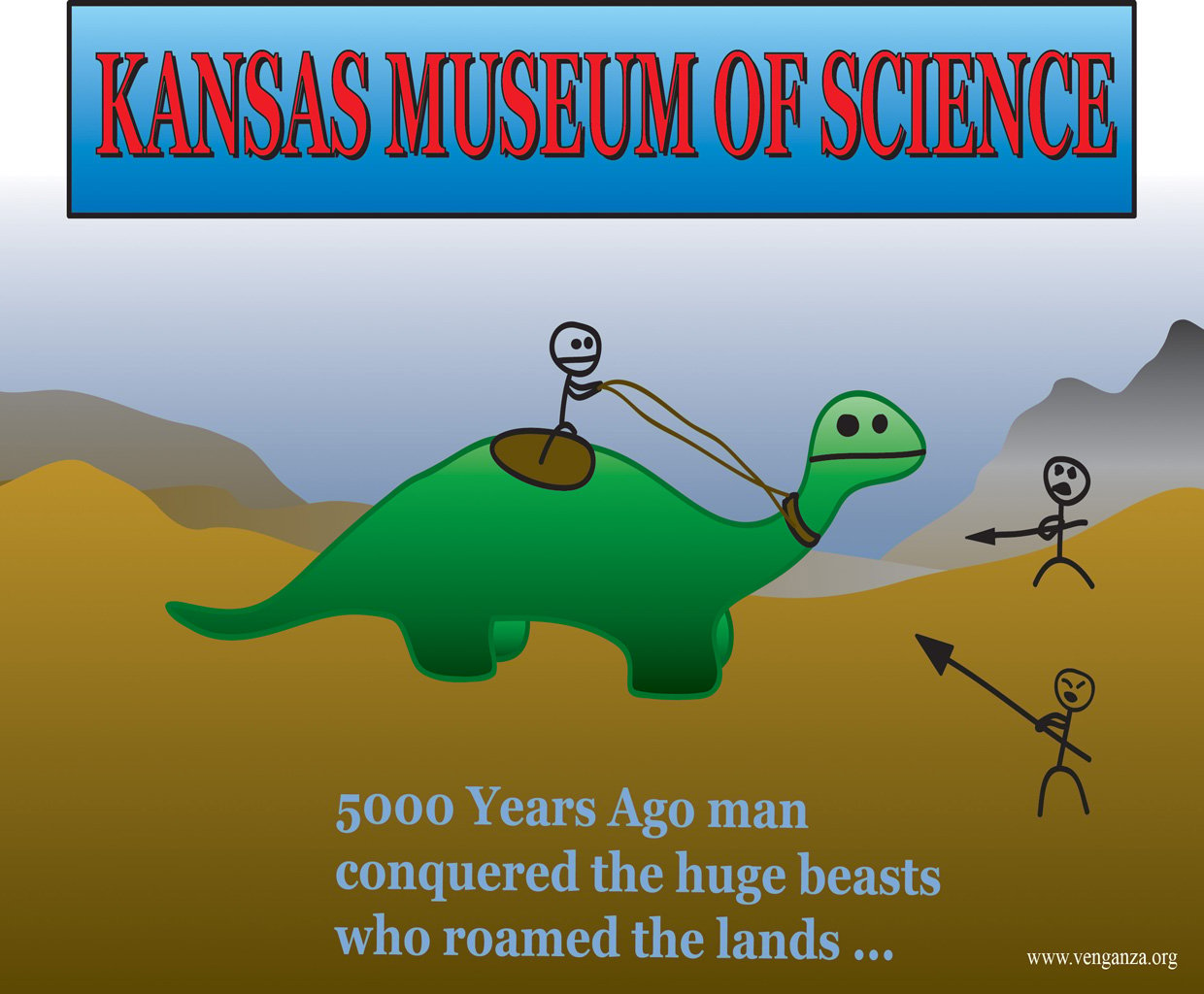
Oxford and Cambridge were established so many years ago that you might think that cavemen came to study here and rode their dinosaurs home. Education has apparently been important around here for quite some time. It would be natural to expect that other universities would have popped up left and right given the success of the first two. But in fact, exactly the opposite happened. The success of the big two prevented the establishment of any more. To use terminology that only physicists will appreciate, the whole country lived in the “correlation-hole” of Oxford and Cambridge. The third university to be established in this country was arguably (and there is argument) University College London in 1826, founded on the rather nice principle of secular education
UCL and its sister colleges recently established the London Centre for Nanotechnology. I went down there last Wednesday to give this seminar and had a chance to look around a bit and talk to the very nice team of scientists they have assembled.
I already know several of the people at LCN quite well. Cyrus Hirjibehedin, my host, I have known since he was a grad student at Columbia because he did much of his research at Bell labs. I think I even coauthored a paper with him (OK, it was Physica E which is not a great journal, but still, it was actually a good paper). After his PhD Cyrus went on to do a postdoc at IBM Almaden where he quickly rose to great fame in the physics community with some extremely beautiful STM experiments studying magnetic atoms on surfaces. When he accepted his job here in London, they agreed to more or less design the new LCN building with his new lab in mind. It is a really impressive setup – and they are doing (and planning) some pretty cool experiments with it too.
The other person who I know well at LCN is my friend, and former colleague from Bell, Oleg Mitrofanov (I didn’t get a chance to see his lab, as it is in a different building). Oleg left Bell to come to the UK only about a year before I did. I think I was Oleg’s department head for a year or two a while back, but he then moved into another department. He seems to be pretty happy about having moved here.
Of course one of the main reasons to go visit universities and research centers (and the reason I am on the road so often) is to make new friends and find out what kinds of interesting new scientific things are going on. I met a number of first rate scientist whose work I hope to follow more closely in the future.
The scientific highlight, perhaps, was that I had my first ever chance to chat with the very senior and very respected Professor (and now knighted so officially “Sir”) Michael Pepper, who is now split between Cambridge and LCN. I was too shy to ask whether when you get knighted you still have to kneel before the queen and be touched with a sword. Wikipedia says you do. I wish we had more time to chat, as there were too many experiments he has done recently that I wanted to discuss. (For the physics savvy, this includes his work on building a surface wave current standard, his study of the so-called .7 structure, and his attempt to develop exciton condensates at zero magnetic field.).
At the end of the rather long day, Cyrus and Oleg took me to dinner at a really nice sea food restaurant. The food was excellent and we found a very nice bottle of wine too. Alas, I neither remember the name of the restaurant (it was near the Great Portland Street tube) nor the name of the wine (it was a Spanish white wine with a somewhat salty taste). I’m sure Cyrus would remember at least the restaurant, then if you go there, they had a pretty limited wine list, so you could probably find the right one based on this description. We chatted for hours, gossiping about physics, common friends (and enemies), and about making the transition to the UK. When it got to be around 10, I realized I had better head for the trains lest I miss the last one home.
I am going to have to make a point of going down there to visit again soon.
UCL and its sister colleges recently established the London Centre for Nanotechnology. I went down there last Wednesday to give this seminar and had a chance to look around a bit and talk to the very nice team of scientists they have assembled.
I already know several of the people at LCN quite well. Cyrus Hirjibehedin, my host, I have known since he was a grad student at Columbia because he did much of his research at Bell labs. I think I even coauthored a paper with him (OK, it was Physica E which is not a great journal, but still, it was actually a good paper). After his PhD Cyrus went on to do a postdoc at IBM Almaden where he quickly rose to great fame in the physics community with some extremely beautiful STM experiments studying magnetic atoms on surfaces. When he accepted his job here in London, they agreed to more or less design the new LCN building with his new lab in mind. It is a really impressive setup – and they are doing (and planning) some pretty cool experiments with it too.
The other person who I know well at LCN is my friend, and former colleague from Bell, Oleg Mitrofanov (I didn’t get a chance to see his lab, as it is in a different building). Oleg left Bell to come to the UK only about a year before I did. I think I was Oleg’s department head for a year or two a while back, but he then moved into another department. He seems to be pretty happy about having moved here.
Of course one of the main reasons to go visit universities and research centers (and the reason I am on the road so often) is to make new friends and find out what kinds of interesting new scientific things are going on. I met a number of first rate scientist whose work I hope to follow more closely in the future.
The scientific highlight, perhaps, was that I had my first ever chance to chat with the very senior and very respected Professor (and now knighted so officially “Sir”) Michael Pepper, who is now split between Cambridge and LCN. I was too shy to ask whether when you get knighted you still have to kneel before the queen and be touched with a sword. Wikipedia says you do. I wish we had more time to chat, as there were too many experiments he has done recently that I wanted to discuss. (For the physics savvy, this includes his work on building a surface wave current standard, his study of the so-called .7 structure, and his attempt to develop exciton condensates at zero magnetic field.).
At the end of the rather long day, Cyrus and Oleg took me to dinner at a really nice sea food restaurant. The food was excellent and we found a very nice bottle of wine too. Alas, I neither remember the name of the restaurant (it was near the Great Portland Street tube) nor the name of the wine (it was a Spanish white wine with a somewhat salty taste). I’m sure Cyrus would remember at least the restaurant, then if you go there, they had a pretty limited wine list, so you could probably find the right one based on this description. We chatted for hours, gossiping about physics, common friends (and enemies), and about making the transition to the UK. When it got to be around 10, I realized I had better head for the trains lest I miss the last one home.
I am going to have to make a point of going down there to visit again soon.
Oxford is an extremely popular tourist destination. On weekends the place starts to resemble Disneyland with all the tour buses running around. I suspect it will get even worse in the summer. But being completely overloaded with academic responsibilities during the insanely short eight week term, I have had no time at all to take in the sights.
Last weekend my friend Marianne came over from the states to visit for a few days, which gave me the chance to play tourist for the first time. Of her four day visit, we spent two of the days in London. The other two days were spent in Oxford.
Incidentally, she survived staying in my house for four days, so this should be encouragement for all my other friends to stop by and visit too.
Fortunately, unlike myself, Marianne is a pretty good photographer. (I'm not sure why it is that every photo I've ever taken comes out blurry or poorly framed, but this seems to be the case). So most of the photos here were taken by her, the obvious exception being the pictures that she is in, like this one:

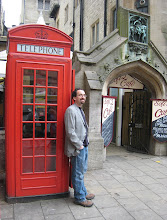
Here she is standing in front of Carfax tower, which is right in the center of the city of Oxford. Note the phone booth in the background.

That's me trying to look British in front of said phonebooth in front of said tower.

The view from the top of the tower is pretty cool. The street that runs off to the left is Cornmarket, which resembles any american strip-mall and is completely out of place in the city of Oxford. (Incidentally, Brits don't know the word strip-mall and think it must have something to do with adult entertainment). The street going straight ahead is high street, the main drag of the city. The tower in the middle is the University Church of St Mary the Virgin. To the left of the tower, the domed roof is the Radcliffe Camera. In front of that is the Bodleian library, partially covered in scaffolding.

From there we went to see Christ Church college, which is one of the best known and richest colleges at Oxford. It is also the largest college of Oxford. It was used as a setting in both the Harry Potter movies and the Golden Compass movie. In the photo you can see the porter walking over to me. His main job appears to be to kick out the tourists or tell them to go to the tourist entryway where they charge you 6 GBP to peek around. I repelled him with my university ID card.

This is more of Christ Church college. In the background you can see the Christ Church College Cathedral. We did not manage to peek inside, but the outside is very pretty. It claims to be both the smallest and the oldest Cathedral (not rebuilt at any time) in England. All of the colleges have churches or cathedrals of some sort, and many of them are impressive. One is constantly reminded that for most of the history of this college, "education" meant "religious education" as there was nothing else.
This is a goose.

Christ church has a large beautiful meadow in the space between the college and the Thames. The goose happened to be walking along the Thames and came over to us hoping to get fed. Alas, he was disappointed. We also saw some crew races along the river while we were there. My guess is that the Goose was actually a student in disguise and was trying to get a lift to the library. This is my bad attempt at a smooth segue to....

This is part of the Bodleian library. The Radcliffe Camera (right, lower) once held the entire science collection of the library

Right across from this is Hertford College and its famous "Bridge of Sighs"

About a block from there is a nice pub called "The Kings Arms". Here's a picture of the college kids having a pint outside the pub (Yes, it is an enlightened place where you can take beer out on the street). It is not unusual for the undergrads to wear suits and ties as in this picture. The pink trousers are evidence that these are particularly stylish (or colorblind) undergrads.

Inside, the pub is very nice --- comfortable and homey, and they serve good food all day. One of the standard pub offerings is the "lamb burger with mint" which tastes a bit middle eastern and is becoming one of my favorite items. Marianne doesn't like this photo, but I think it is pretty good (remember, I'm a horrible photographer, so maybe my standards are lower).

Around the corner from the pub is the Sheldonian Theatre which is surrounded by an army of carved stone heads like this one

Then around the corner from them is Jesus College. Here is the great hall of that college. All of the colleges have Halls like this for formal dinners. Some are nicer than others.

Then just across the street is Exeter college, which has a very nice chapel

By far the best views in town are from the top of the University Church of St Mary the Virgin. Getting to the top is a dizzying walk up a steep spiral staircase, and there is not a whole lot of room at the top. I'm sure on busy summer days it will be a long wait to go up. But in the cold winter it was no problem.

In this shot from the Church tower, the spire is the top of the Exeter College chapel. The college in the foreground is Brasenose I think.
Everyone is required to get the quintessential photo of the Radcliffe Camera from the top the Church.


Panning to the right is All Souls College.
In comparison, my college, Somerville, seems kind of meager. Built since the mid 1800s, it seems a lot more like a typical american college.
The two windows on the first floor, just to the right of the sign in the middle of this photo are my office.

Here is a picture of me in my office.

There are about thirty colleges at Oxford, and each one of them has something to see. We only had time to see some of the highlights, but I'm going to have to snoop around some of the others to see what interesting things are around. The last two photos are both from the British Museum in London, but I thought they were pretty cool so I'm going to post them anyway.


Last weekend my friend Marianne came over from the states to visit for a few days, which gave me the chance to play tourist for the first time. Of her four day visit, we spent two of the days in London. The other two days were spent in Oxford.
Incidentally, she survived staying in my house for four days, so this should be encouragement for all my other friends to stop by and visit too.
Fortunately, unlike myself, Marianne is a pretty good photographer. (I'm not sure why it is that every photo I've ever taken comes out blurry or poorly framed, but this seems to be the case). So most of the photos here were taken by her, the obvious exception being the pictures that she is in, like this one:

Here she is standing in front of Carfax tower, which is right in the center of the city of Oxford. Note the phone booth in the background.

That's me trying to look British in front of said phonebooth in front of said tower.

The view from the top of the tower is pretty cool. The street that runs off to the left is Cornmarket, which resembles any american strip-mall and is completely out of place in the city of Oxford. (Incidentally, Brits don't know the word strip-mall and think it must have something to do with adult entertainment). The street going straight ahead is high street, the main drag of the city. The tower in the middle is the University Church of St Mary the Virgin. To the left of the tower, the domed roof is the Radcliffe Camera. In front of that is the Bodleian library, partially covered in scaffolding.

From there we went to see Christ Church college, which is one of the best known and richest colleges at Oxford. It is also the largest college of Oxford. It was used as a setting in both the Harry Potter movies and the Golden Compass movie. In the photo you can see the porter walking over to me. His main job appears to be to kick out the tourists or tell them to go to the tourist entryway where they charge you 6 GBP to peek around. I repelled him with my university ID card.

This is more of Christ Church college. In the background you can see the Christ Church College Cathedral. We did not manage to peek inside, but the outside is very pretty. It claims to be both the smallest and the oldest Cathedral (not rebuilt at any time) in England. All of the colleges have churches or cathedrals of some sort, and many of them are impressive. One is constantly reminded that for most of the history of this college, "education" meant "religious education" as there was nothing else.
This is a goose.

Christ church has a large beautiful meadow in the space between the college and the Thames. The goose happened to be walking along the Thames and came over to us hoping to get fed. Alas, he was disappointed. We also saw some crew races along the river while we were there. My guess is that the Goose was actually a student in disguise and was trying to get a lift to the library. This is my bad attempt at a smooth segue to....

This is part of the Bodleian library. The Radcliffe Camera (right, lower) once held the entire science collection of the library

Right across from this is Hertford College and its famous "Bridge of Sighs"

About a block from there is a nice pub called "The Kings Arms". Here's a picture of the college kids having a pint outside the pub (Yes, it is an enlightened place where you can take beer out on the street). It is not unusual for the undergrads to wear suits and ties as in this picture. The pink trousers are evidence that these are particularly stylish (or colorblind) undergrads.

Inside, the pub is very nice --- comfortable and homey, and they serve good food all day. One of the standard pub offerings is the "lamb burger with mint" which tastes a bit middle eastern and is becoming one of my favorite items. Marianne doesn't like this photo, but I think it is pretty good (remember, I'm a horrible photographer, so maybe my standards are lower).

Around the corner from the pub is the Sheldonian Theatre which is surrounded by an army of carved stone heads like this one

Then around the corner from them is Jesus College. Here is the great hall of that college. All of the colleges have Halls like this for formal dinners. Some are nicer than others.

Then just across the street is Exeter college, which has a very nice chapel

By far the best views in town are from the top of the University Church of St Mary the Virgin. Getting to the top is a dizzying walk up a steep spiral staircase, and there is not a whole lot of room at the top. I'm sure on busy summer days it will be a long wait to go up. But in the cold winter it was no problem.

In this shot from the Church tower, the spire is the top of the Exeter College chapel. The college in the foreground is Brasenose I think.
Everyone is required to get the quintessential photo of the Radcliffe Camera from the top the Church.


Panning to the right is All Souls College.
In comparison, my college, Somerville, seems kind of meager. Built since the mid 1800s, it seems a lot more like a typical american college.
The two windows on the first floor, just to the right of the sign in the middle of this photo are my office.

Here is a picture of me in my office.

There are about thirty colleges at Oxford, and each one of them has something to see. We only had time to see some of the highlights, but I'm going to have to snoop around some of the others to see what interesting things are around. The last two photos are both from the British Museum in London, but I thought they were pretty cool so I'm going to post them anyway.


Many physicists and astronomers consider Galileo Galilei to be the father of modern science. He was probably the first to suggest that the laws of nature could be understood with mathematics. Famously, his observations of the heavens put him in conflict with the church and he almost lost his head over the matter.
This year marks the 400th anniversary of Galileo's demonstration of the telescope (it was actually invented by a Dutchman, but after reading a report of it, Galileo managed to reproduce the device and improve it substantially). Because of this anniversary, 2009 has been declared the international year of astronomy.
But this blog entry is not about Galileo the astronomer. This entry is about another astronomer named Brian who started studying physics in the 1960s and finally obtained his PhD in astrophysics in 2008. This is not because he was slow, but rather because he took a long hiatus to do something else with his life. Nonetheless, he may be one of the world's best known astronomers now.
The reason I was thinking about Brian is that he has recently co-authored a successful popular book called "Bang!, the complete history of the universe" with an astronomy postdoc ("Junior Research Fellow") at Oxford and Somerville named Chris.
"Brian", is Brian May, from the amazing rock group "Queen". He left graduate school to have a career as one of the greatest rock guitar players of all time. I guess that worked out pretty well for him. But after years of rockin' out -- he decided to go back, at age 60, to finish up what he started. You can find his PhD thesis here. I haven't read it, but I'm told it is pretty solid. Here's a picture of him at the graduation ceremony.
"Galileo! Galileo! Galileo, Figaro! "
This year marks the 400th anniversary of Galileo's demonstration of the telescope (it was actually invented by a Dutchman, but after reading a report of it, Galileo managed to reproduce the device and improve it substantially). Because of this anniversary, 2009 has been declared the international year of astronomy.
But this blog entry is not about Galileo the astronomer. This entry is about another astronomer named Brian who started studying physics in the 1960s and finally obtained his PhD in astrophysics in 2008. This is not because he was slow, but rather because he took a long hiatus to do something else with his life. Nonetheless, he may be one of the world's best known astronomers now.
The reason I was thinking about Brian is that he has recently co-authored a successful popular book called "Bang!, the complete history of the universe" with an astronomy postdoc ("Junior Research Fellow") at Oxford and Somerville named Chris.
"Brian", is Brian May, from the amazing rock group "Queen". He left graduate school to have a career as one of the greatest rock guitar players of all time. I guess that worked out pretty well for him. But after years of rockin' out -- he decided to go back, at age 60, to finish up what he started. You can find his PhD thesis here. I haven't read it, but I'm told it is pretty solid. Here's a picture of him at the graduation ceremony.
"Galileo! Galileo! Galileo, Figaro! "
A thousand years ago this year a horde of Vikings led by Sweyn Forkbeard torched the city of Oxford to the ground as retribution for the ethnic cleansing of Danes ordered by King Ethelred the Unready of England (Needless to say, he was termed unready because of his rather stupid orders that brought destruction to his own kingdom).
About a hundred years later Oxford began to be considered a center of higher learning of some reputation, with literally thousands of students even in those early times. But violence was never far away with blood often flowing in the streets one way or the other.
Exactly eight hundred years ago this year, the situation became so bad that the university had to suspend all studies. Here is a short history of the conflict of that year (from here)
“ An Oxford clerk kills a woman—accidentally, as it is afterwards said. But the culprit flees. The town authorities search the dwelling wherein he lodged, and, in his absence, arrest two or three of his companions, who are perfectly innocent of the offence, if such it be. King John, however, is in the middle of his famous quarrel with the pope, and is ready to wreak his vengeance on any clerk. On the king’s instructions, the innocent prisoners are hanged. In combined fear and indignation, the Oxford masters proclaim a suspension of studies; and the scholars scatter.”
The university was reinstated five years later, but conflict between town and gown continued on and off, with riots occurring into the late 1800s.
There is a rather vocal band of history minded Oxonians that feel like we should re-enact the torching of the city (See here). For my money though, I’d rather see a re-enactment of the scholars fleeing the city. It happens between terms anyway.
A few minor updates:
* Congratulations to Fiona Burnell, who was indeed awarded the All-Souls fellowship (that is rather a big deal).
* My replacement bed is scheduled to be delivered tomorrow – I’m preparing myself for three more hours with a screwdriver, cursing the name of the bed company.
Added: I finally have a bed. About $!@%# time. I bought the thing on January 10th.
* I've discovered that Philip Pullman lives somewhere within a few blocks of me. One of my friends at Somerville just "happened" to have dinner with him this weekend. This will be one of my objectives.
* My webpage at Oxford finally went live here. It is horribly ugly and has a bunch of typos too. But it took two months for me to get anything up at all, so I'm not too eager to try to fix it.
About a hundred years later Oxford began to be considered a center of higher learning of some reputation, with literally thousands of students even in those early times. But violence was never far away with blood often flowing in the streets one way or the other.
Exactly eight hundred years ago this year, the situation became so bad that the university had to suspend all studies. Here is a short history of the conflict of that year (from here)
“ An Oxford clerk kills a woman—accidentally, as it is afterwards said. But the culprit flees. The town authorities search the dwelling wherein he lodged, and, in his absence, arrest two or three of his companions, who are perfectly innocent of the offence, if such it be. King John, however, is in the middle of his famous quarrel with the pope, and is ready to wreak his vengeance on any clerk. On the king’s instructions, the innocent prisoners are hanged. In combined fear and indignation, the Oxford masters proclaim a suspension of studies; and the scholars scatter.”
The university was reinstated five years later, but conflict between town and gown continued on and off, with riots occurring into the late 1800s.
There is a rather vocal band of history minded Oxonians that feel like we should re-enact the torching of the city (See here). For my money though, I’d rather see a re-enactment of the scholars fleeing the city. It happens between terms anyway.
A few minor updates:
* Congratulations to Fiona Burnell, who was indeed awarded the All-Souls fellowship (that is rather a big deal).
* My replacement bed is scheduled to be delivered tomorrow – I’m preparing myself for three more hours with a screwdriver, cursing the name of the bed company.
Added: I finally have a bed. About $!@%# time. I bought the thing on January 10th.
* I've discovered that Philip Pullman lives somewhere within a few blocks of me. One of my friends at Somerville just "happened" to have dinner with him this weekend. This will be one of my objectives.
* My webpage at Oxford finally went live here. It is horribly ugly and has a bunch of typos too. But it took two months for me to get anything up at all, so I'm not too eager to try to fix it.
Subscribe to:
Posts (Atom)